Overview
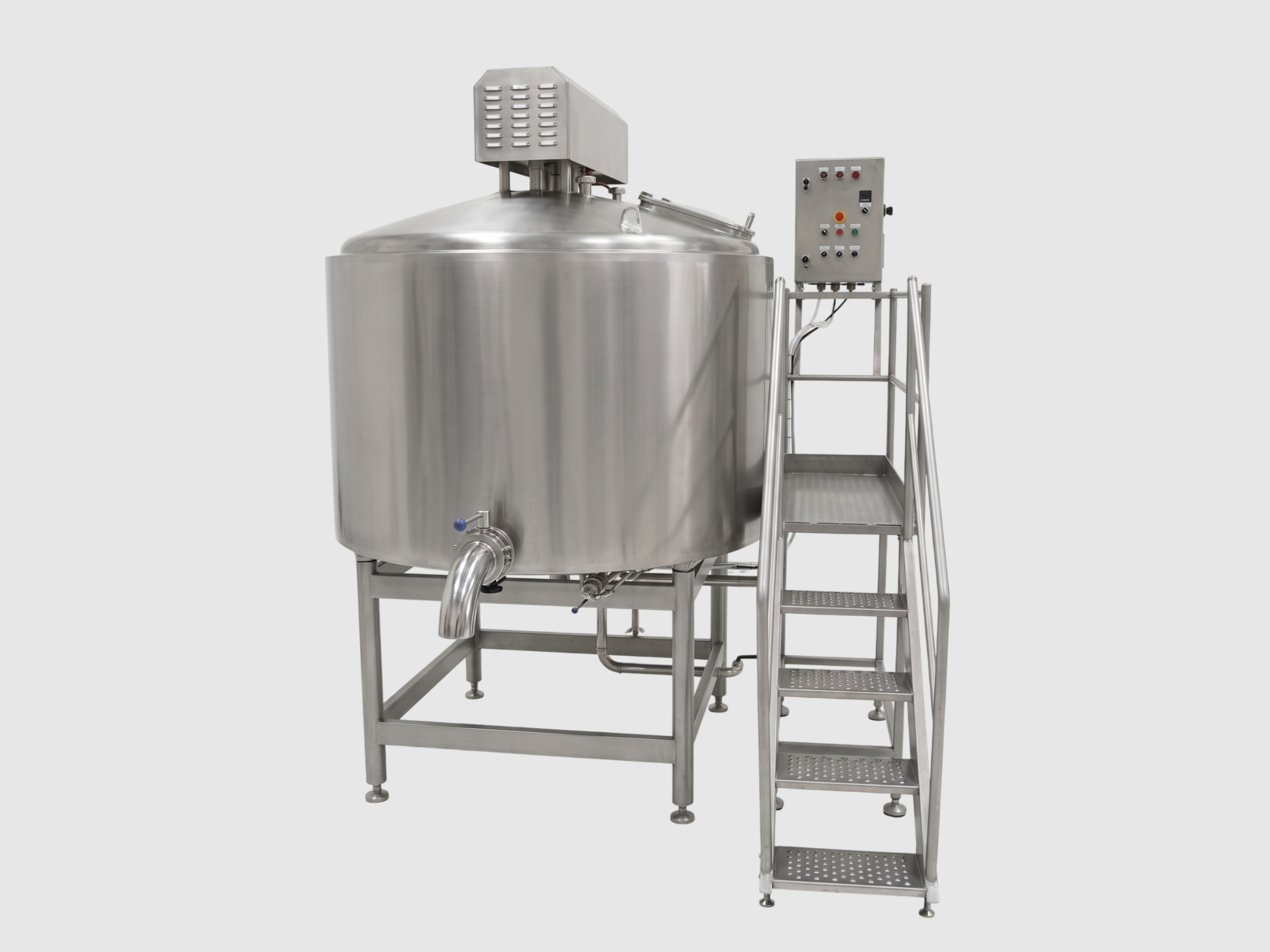
The Labneh Process Tank is a large-capacity, scraped-surface mixing vessel specifically designed for the fermentation and concentration of labneh (strained yogurt cheese). It maintains precise temperature control during the long fermentation cycle and provides gentle, continuous agitation to ensure uniform culture distribution and consistent product quality across the entire batch. Pasteurized and inoculated milk is transferred to the process tank, which is maintained at the optimal fermentation temperature (38–42 °C) by the double-wall jacket connected to a thermostatically controlled hot-water circuit. The slow-speed scraped-surface agitator prevents the formation of a stiff gel layer on the tank walls, ensuring that the entire batch ferments uniformly. Once the target pH (4.2–4.6) is reached, the tank jacket switches to chilled water to cool the product and arrest fermentation. The fermented labneh is then pumped to a separation or draining system to achieve the desired moisture content.
Working Principle
Pasteurized and inoculated milk is transferred to the process tank maintained at the optimal fermentation temperature (38–42 °C) by the double-wall jacket connected to a thermostatically controlled hot-water circuit. The slow-speed scraped-surface agitator prevents the formation of a stiff gel layer on the tank walls, ensuring that the entire batch ferments uniformly. An inline pH probe port allows real-time acidity monitoring throughout the fermentation cycle. Once the target pH (4.2–4.6) is reached, the PLC automatically switches the jacket to chilled water to cool the product and arrest fermentation. The fermented labneh is then pumped to a separation or draining system to achieve the desired moisture content. The large-diameter manhole provides easy access for inspection and manual cleaning when required.
Applications
The Labneh Process Tank is used in labneh, Greek yogurt, quark, fromage blanc, skyr, and other fermented and strained dairy product manufacturing. It is also used in probiotic beverage and cultured cream production.