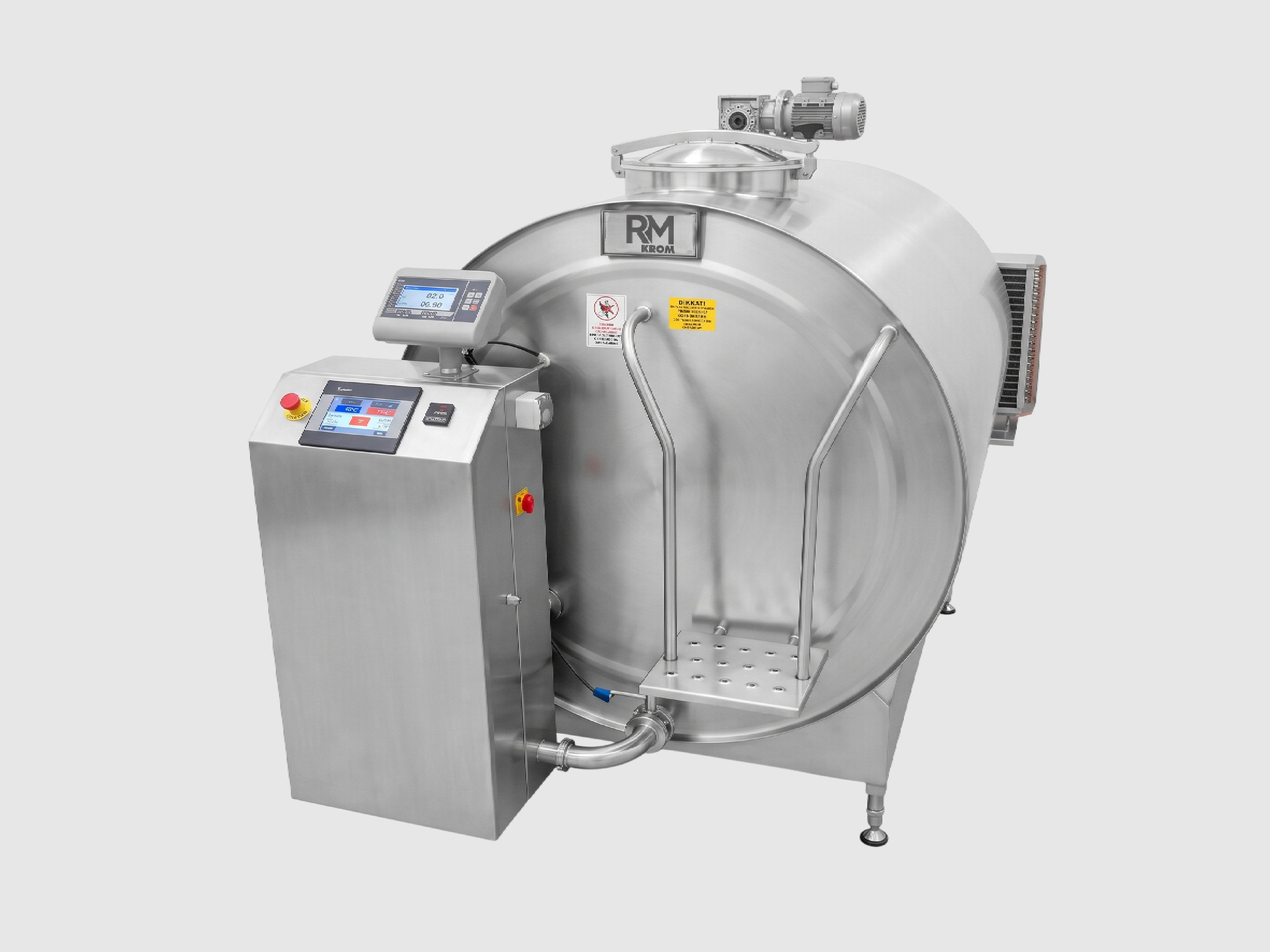
Overview
The Milk Cooling Tank is a large-capacity, farm-level or collection-center storage vessel designed to receive, cool, and hold raw milk at 4 °C until it is transported to the processing plant. With capacities from 3,000 L to 50,000 L, these tanks are the backbone of the cold chain and are built to comply with international dairy hygiene standards including EU Regulation 853/2004 and FDA PMO requirements. An evaporator coil welded directly to the outer surface of the inner tank acts as the primary heat-exchange surface, providing highly efficient direct-expansion cooling without the energy losses associated with secondary coolant loops. A variable-speed agitator circulates the milk continuously, preventing cream separation and ensuring that every litre reaches the target temperature uniformly. An automatic CIP system with programmable wash cycles eliminates manual cleaning, reducing labor costs and ensuring consistent hygiene between collections.
Working Principle
Direct-expansion or ice-bank refrigeration options are available. In the direct-expansion system, refrigerant expands directly in the evaporator coil welded to the tank wall, absorbing heat from the milk with maximum efficiency. In the ice-bank system, water is first frozen around a submerged coil during off-peak hours, and this ice reserve is then used to cool the milk during peak collection periods — ideal for operations with high instantaneous milk volumes or limited electrical capacity. The variable-speed agitator ensures uniform temperature distribution and prevents cream separation. The automatic CIP system executes pre-rinse, detergent wash, and sanitization cycles on a programmable schedule, maintaining consistent hygiene between collections without manual intervention.
Applications
The Milk Cooling Tank is used at farm level for on-site milk storage, in village collection centers and cooperative cooling stations, at large-scale dairy processing plant intake sections, and as buffer storage for pasteurized milk prior to filling. It is also used for temporary storage of whey and other dairy by-products.